
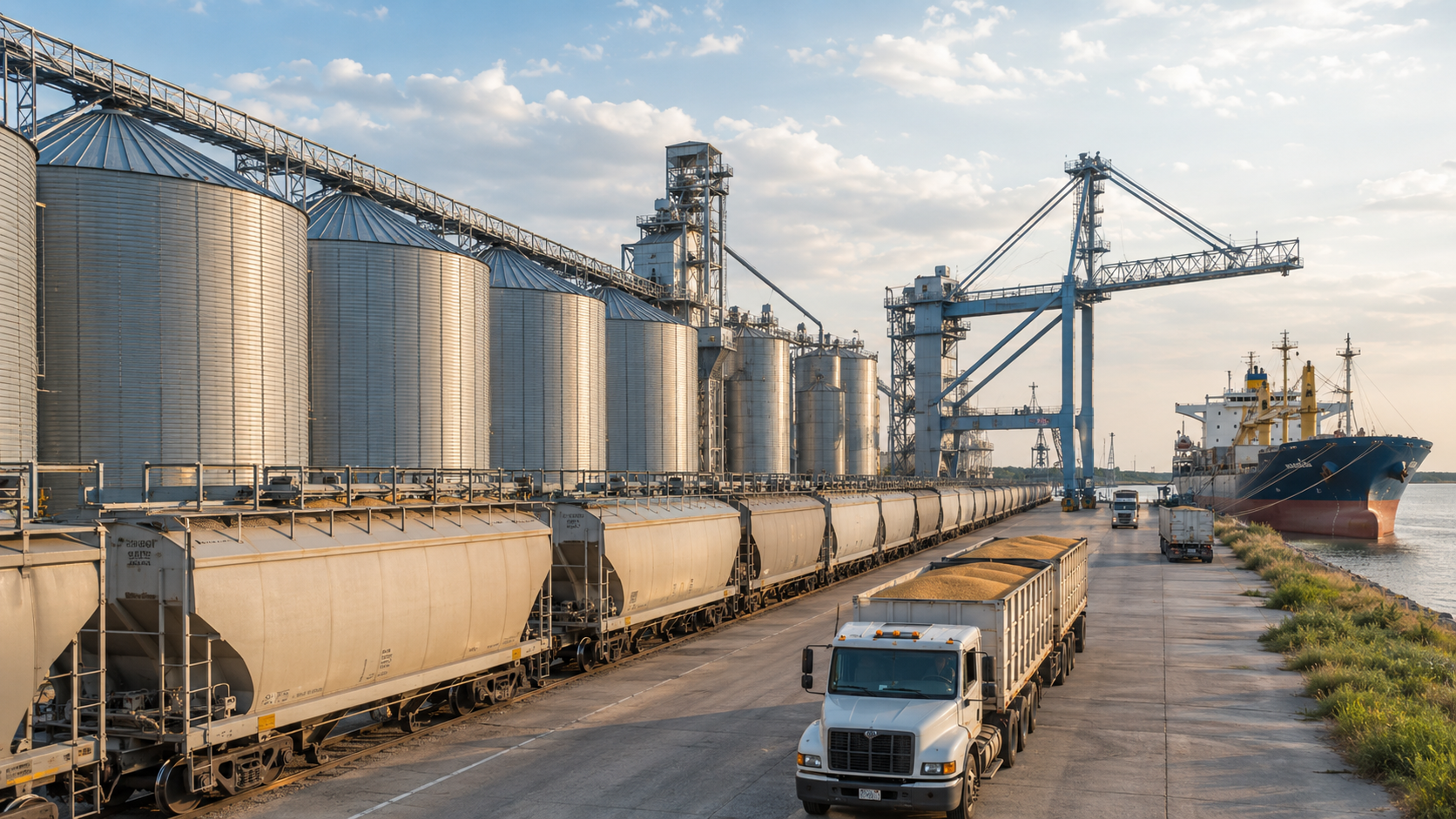
May is one of the most important months for grain logistics planning. The new harvest may not yet be fully moving, but the logistics chain should already be prepared: storage capacity, inland transport, rail options, terminal planning, documentation and commercial communication.
For grain exporters, the main challenge is timing. Once harvest volumes begin to accumulate, pressure quickly moves from the field to elevators, warehouses, trucks, rail connections and ports. If capacity has not been secured in advance, companies may face bottlenecks at exactly the moment when speed and reliability matter most.
Storage is the first critical point. Grain needs appropriate conditions, clear stock visibility and coordinated release planning. Without this, even available transport may not solve the problem, because cargo cannot move efficiently if it is not properly prepared, documented and positioned.
Port and terminal planning is the second critical point. Grain flows are seasonal and infrastructure demand can rise sharply. Exporters should clarify expected loading windows, terminal requirements, vessel schedules and possible alternatives before the peak arrives.
Rail capacity also deserves early attention. When used correctly, rail can support larger volumes and reduce pressure on road transport. However, it requires planning: wagon availability, loading points, schedules, terminal coordination and documentation must be aligned before execution starts.
The most reliable grain logistics strategies are built before the harvest reaches full speed. They combine operational realism with flexible routing and clear communication between all parties. Kazco Logistics helps clients prepare for seasonal flows by coordinating the chain from storage and inland movement to port execution and final delivery. In grain logistics, preparation is not a formality. It is the difference between controlled movement and avoidable disruption.