
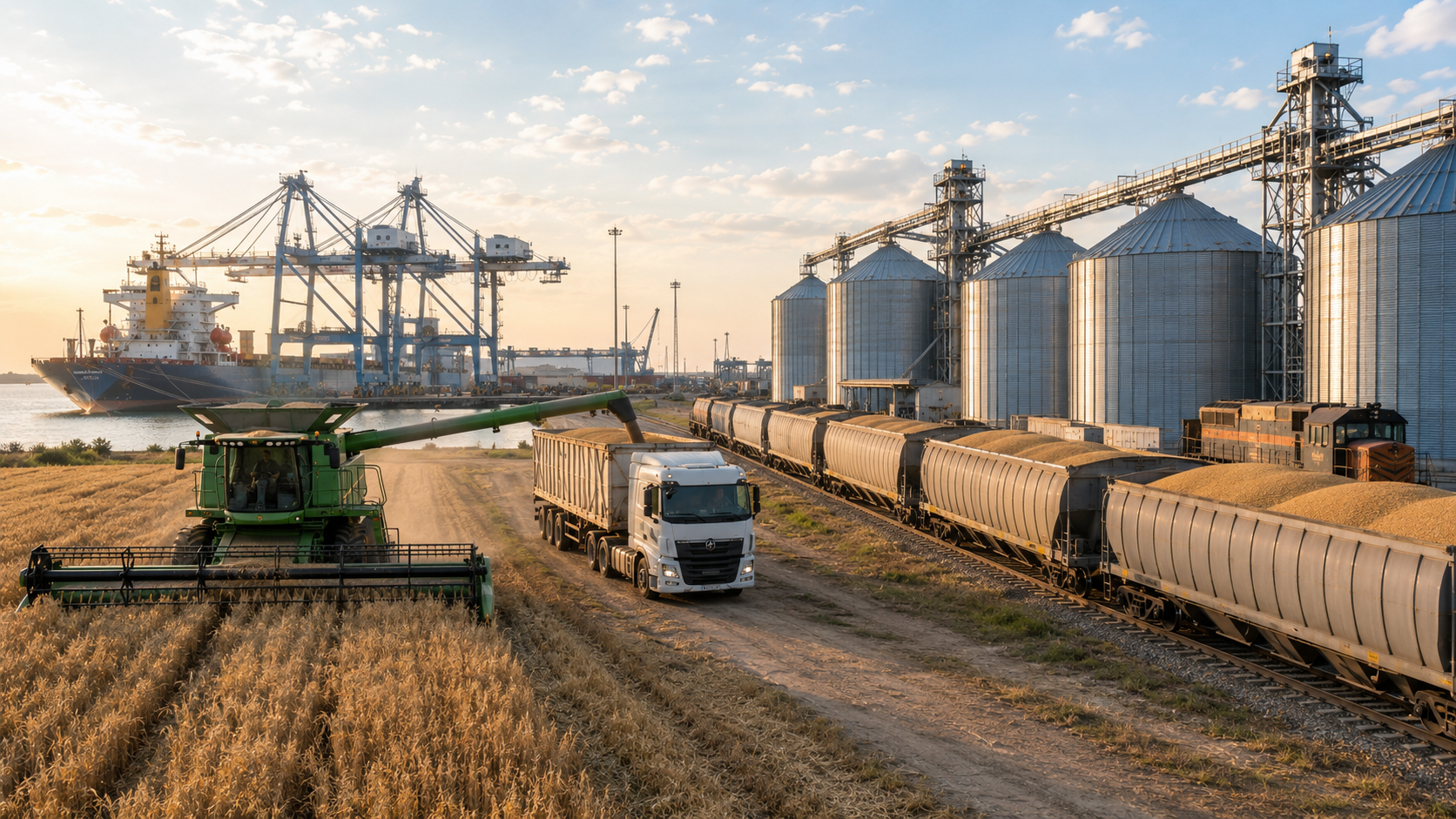
June marks the moment when grain logistics begins to move from preparation to execution. In the previous months, companies planned storage capacity, transport options, terminal access and documentation. Now these decisions start to face the real test: actual cargo volumes, limited time windows and the pressure of seasonal flows.
For exporters, the beginning of the harvest season is not only an agricultural milestone. It is an operational checkpoint. If the logistics chain has been prepared correctly, cargo can move with fewer disruptions from the field to storage, from storage to inland transport, and from there to the port or final destination. If preparation was weak, the same chain quickly becomes vulnerable to delays, additional costs and lost commercial flexibility.
The first critical point is storage. Harvest volumes do not always move immediately. Cargo needs to be received, checked, stored and released according to a clear plan. Without stock visibility and coordinated release schedules, even available transport may stand idle while cargo is not ready for shipment.
The second critical point is inland transport. Road and rail capacity must be aligned with real shipment windows, not with optimistic assumptions. When several cargo owners compete for the same routes, wagons, trucks and loading slots, early coordination becomes a practical advantage. The strongest logistics plans include not only the preferred transport mode, but also alternative scenarios.
The third critical point is port execution. A port is not just the final point of inland delivery. It is a system of terminal capacity, loading windows, vessel schedules, documentation, storage rules and operational discipline. If one element is not synchronized, the entire shipment may lose time.
This is why harvest logistics requires a coordinated approach. Route planning, documentation, storage, rail, road transport and terminal handling must be managed as one chain, not as separate services. The objective is not only to move cargo, but to protect the commercial result of the client.
For Kazco Logistics, the harvest season is a practical test of logistics quality. Reliable execution depends on preparation, flexibility and clear communication between all participants in the chain. In seasonal grain logistics, control is not created at the port. It starts much earlier — with the right plan, the right partners and the ability to adjust quickly when conditions change.