
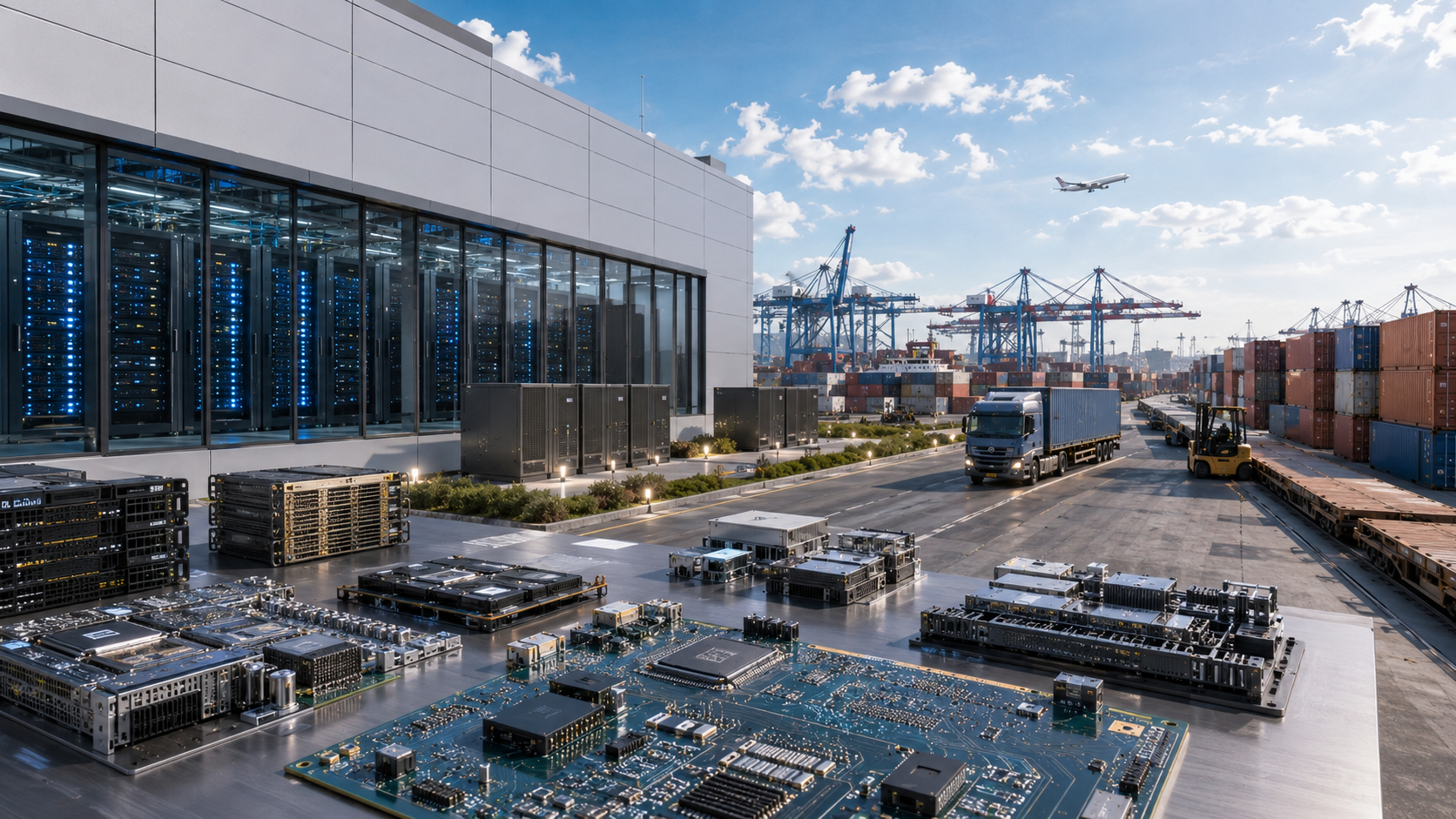
Artificial intelligence is changing not only the technology sector, but also the global supply chain for electronic components. As companies invest in AI data centers, the demand for chips, power modules, memory, connectors, battery systems, cooling equipment and energy infrastructure is increasing across multiple industries at the same time.
This creates a new reality for procurement teams. Electronic components are no longer just items to be purchased when needed. They are strategic inputs that can determine whether a project is launched on time, whether equipment is delivered without interruption and whether the final client receives a reliable solution.
One of the strongest drivers of this shift is the rapid growth of data centers. AI infrastructure requires stable electricity, advanced power management, backup capacity and high-performance components. This increases demand not only for semiconductors, but also for the broader ecosystem around them: power-management chips, transformers, switchgear, circuit protection, cabling, batteries and control systems.
The challenge is that supply chains for these components are complex and often global. A single project may depend on suppliers from Asia, Europe and North America, while delivery routes may include sea freight, air freight, customs clearance, warehousing and final distribution. When demand grows quickly, weak coordination can lead to delays, higher costs and limited availability.
For companies working with electronic components, early sourcing becomes a practical advantage. It allows buyers to compare suppliers, check availability, reserve production capacity, prepare documentation and plan transport before the market becomes overloaded. Waiting until the component is urgently needed often means fewer options and higher risk.
Another important factor is supplier reliability. In a fast-growing market, the lowest price is not always the safest decision. Buyers need to understand whether the supplier can provide consistent quality, correct documentation, realistic delivery terms and transparent communication. This is especially important for batteries, power systems and industrial electronics, where delays or incorrect specifications can affect the entire project.
Logistics also plays a critical role. Electronic components may require careful handling, controlled packaging, accurate documentation and predictable delivery windows. Depending on the urgency, cargo value and destination, companies may need air freight, sea freight, multimodal transport or combined delivery models. The right logistics structure depends on the business task, not on a standard route.
For Kazco Logistics, international supply of electronic components is not only about transportation. It is about connecting sourcing, supplier coordination, documentation and logistics into one controlled process. In a market shaped by AI data centers, energy infrastructure and growing demand for advanced electronics, reliability is created before the shipment starts.
Companies that plan sourcing early, diversify suppliers and build flexible logistics chains will be better prepared for the next phase of market growth. In electronic components supply, speed matters — but controlled speed matters more.