
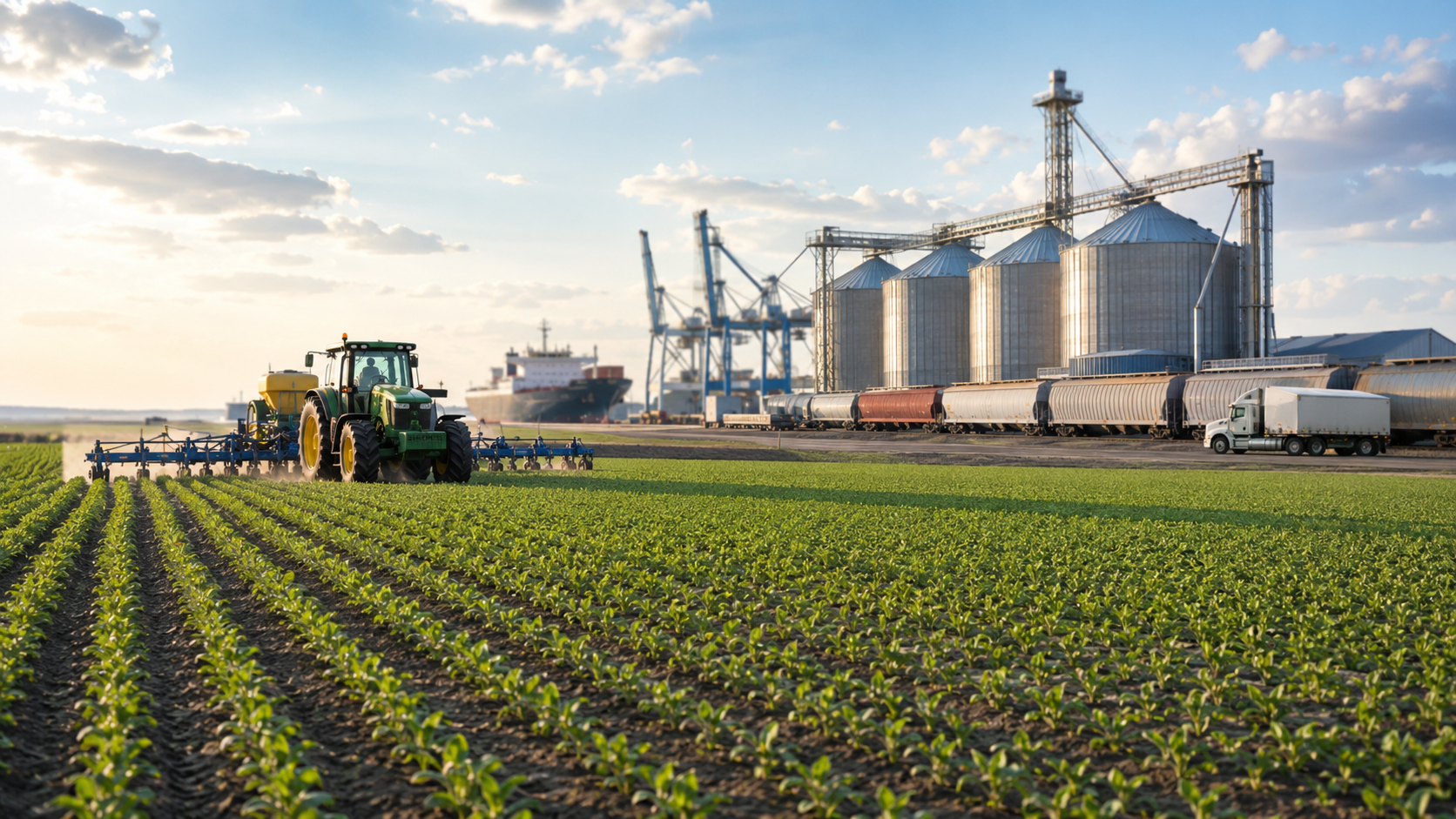
April is a key planning window for spring crops and for the logistics systems that will eventually move them. While agricultural teams focus on field work and crop development, exporters and traders should already be thinking about storage, inland transport and port capacity for the months ahead.
The reason is simple: export readiness does not begin at harvest. It begins when companies understand expected volumes, likely routes and operational constraints. If logistics planning starts only when cargo is already accumulated, the business may face higher costs, limited capacity and avoidable delays.
Spring crops often create complex logistics requirements. Cargo may need to be collected from different origins, consolidated at storage points, inspected, documented and then moved toward ports or processing facilities. Each of these steps requires time and coordination. The earlier these steps are mapped, the better the final execution will be.
Another important factor is the relationship between agricultural timing and transport availability. When several commodities move in overlapping windows, trucks, rail capacity and terminal slots can become more difficult to secure. This is why exporters need realistic lead times, not optimistic assumptions.
Documentation is also part of export readiness. Certificates, quality control, customs information and commercial paperwork should not be treated as a final administrative step. In many cases, documents determine whether cargo can move on time or remains blocked at a critical point in the chain.
Kazco Logistics supports clients by looking at export readiness as an integrated process. The question is not only where the cargo will go, but how each operational element will connect: origin, storage, transport, port, documents and final delivery. When these elements are aligned early, seasonal exports become more predictable and more efficient.